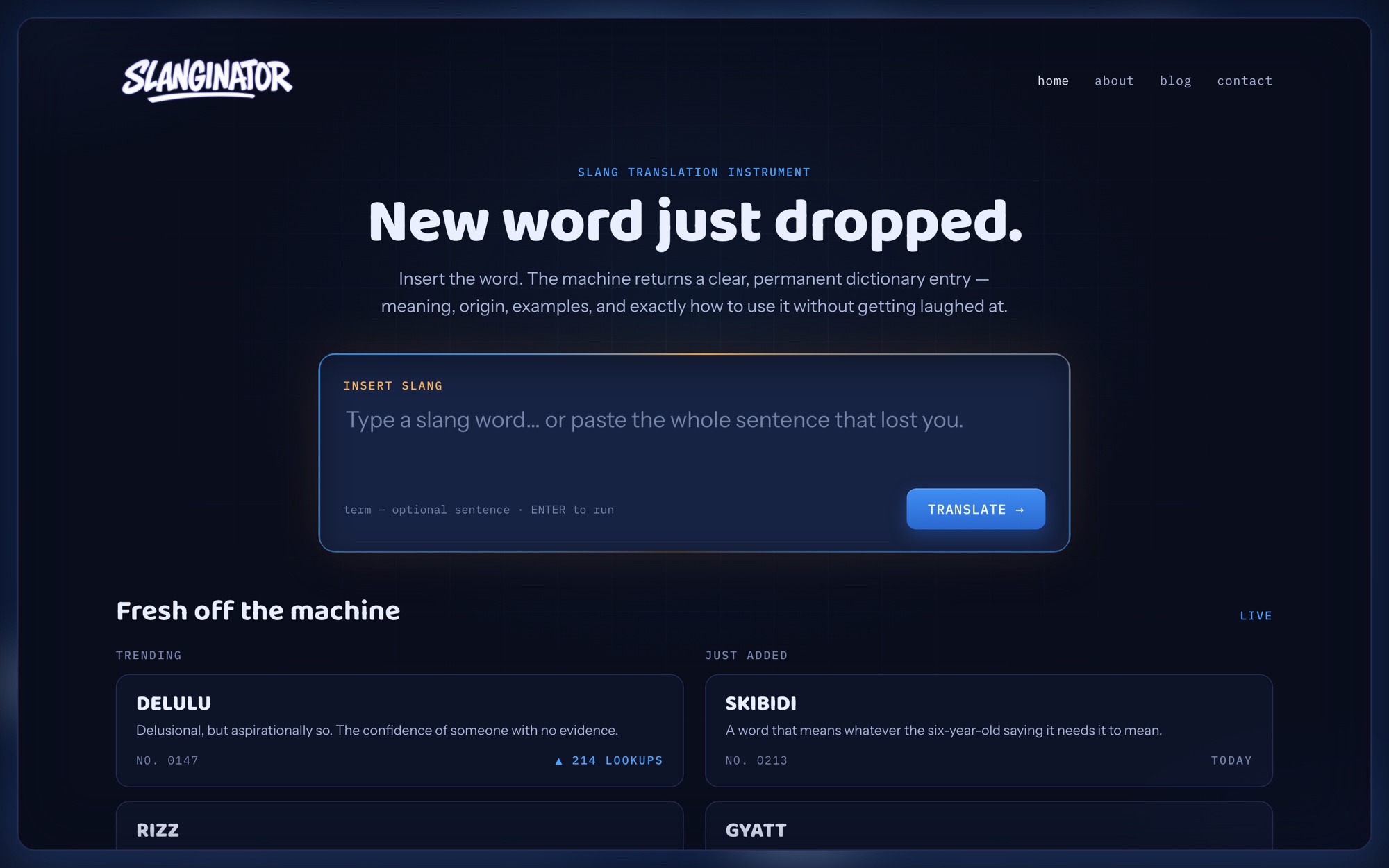
Somebody says a word you’ve never heard, in a sentence that made everyone else nod. You could ask. You won’t. That’s the gap Slanginator fills: type the word — or paste the whole sentence that lost you — and it hands back a clear, permanent dictionary entry. Meaning, origin, examples, and exactly how to use it without getting laughed at.
An instrument, not a feed
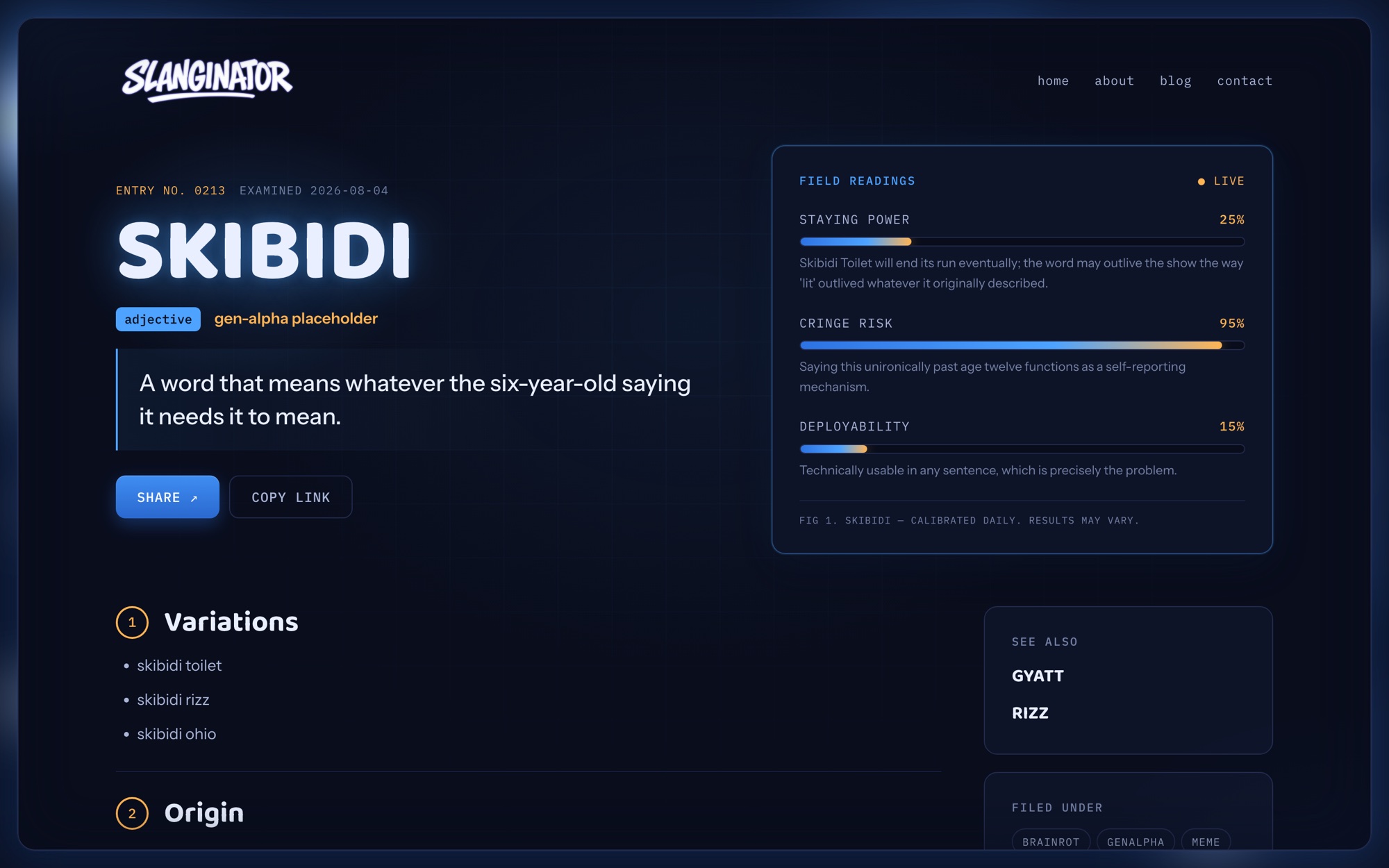
Every entry reads like it came off a calibrated machine: numbered, dated, cross-referenced, measured. FIELD READINGS gauge each term’s staying power, cringe risk, and deployability, each with a deadpan one-line note. The whole site is built like the instruction manual for a device that doesn’t quite exist — precision diagrams, gold-numbered steps, a glow in the dark.
The dictionary writes itself
Here’s the strange part. Ask for a word it doesn’t know, and a minute later the entry exists — written, numbered, filed, and permanent, as if it had always been there. We won’t say much about what happens in that minute. There’s a machine in the back room. It reads a lot.
Entry NO. 0213 — SKIBIDI — was the first word the dictionary learned on its own, with nobody at the controls. It has been growing ever since.
Quality control
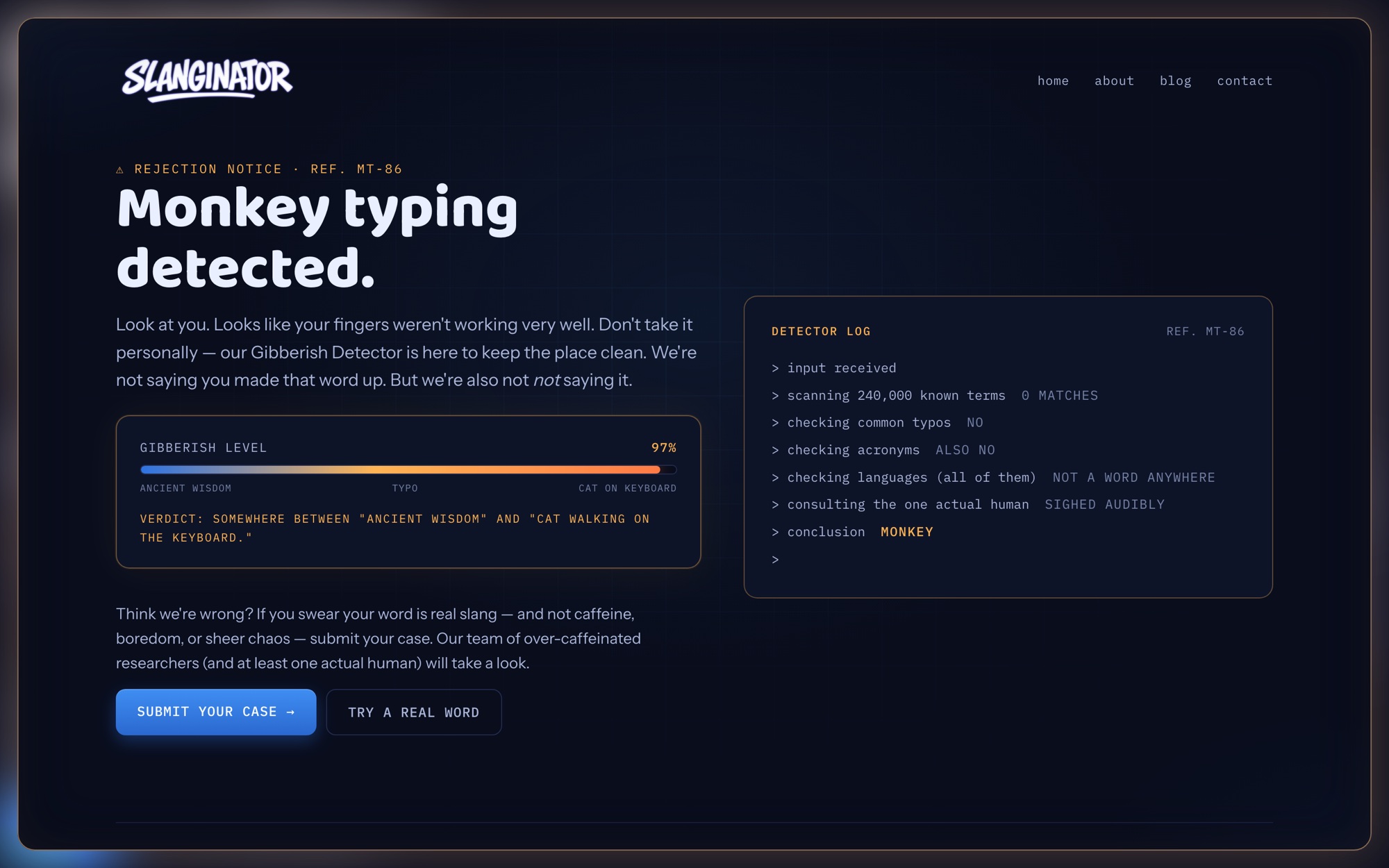
Feed it gibberish and it won’t play along. The Gibberish Detector rates your input on a scale from “ancient wisdom” to “cat walking on the keyboard,” files a rejection notice, and invites you to submit your case to our team of over-caffeinated researchers (and at least one actual human). Confusion is never the objective — the entries stay clear even when the words aren’t.